
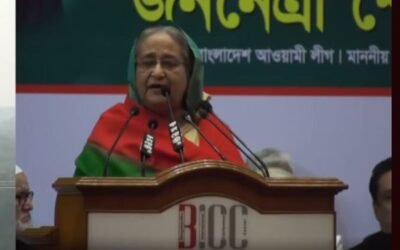





Bangladesh’s ex-PM Sheikh Hasina sentenced to death in 2025

The ousted prime minister was found guilty of ordering a deadly crackdown on student-led protests that killed up to 1,400 people in 2024
Bangladesh’s ousted Prime Minister Sheikh Hasina received a death sentence from a war crimes tribunal on Nov. 17, marking the most dramatic legal action against a former leader in the country’s recent history.
The 78-year-old former prime minister was found guilty of ordering a deadly crackdown on student-led protests that erupted in July and August 2024. The International Crimes Tribunal in Dhaka delivered the verdict in her absence, as Hasina has remained in India since fleeing the country in August 2024.
A historic ruling amid tight security
The tribunal handed down both a life sentence for crimes against humanity and a death sentence for the killing of multiple people during the uprising. Security forces maintained a heavy presence around the court complex and key government buildings in Dhaka and other major cities as the verdict was announced.
Cheering and clapping erupted in the courtroom as the death sentence was pronounced, reflecting the intense emotions surrounding the case. The ruling comes just months before parliamentary elections scheduled for early February, raising concerns about potential unrest in the Muslim-majority nation of 170 million people.
The deadly student uprising
According to a United Nations report, between 1,400 people may have been killed during protests that took place from July 15 to Aug. 5, 2024. Thousands more suffered injuries, with most casualties resulting from gunfire by security forces. The violence represented the worst bloodshed Bangladesh has experienced since its 1971 war of independence.
Prosecutors presented evidence during the trial indicating that Hasina directly commanded security forces to use lethal force against the student demonstrators. The uprising ultimately led to her removal from power and subsequent flight to neighboring India.
Defense claims political motivation
A state-appointed defense counsel represented Hasina during the proceedings, arguing that the charges were baseless and requesting her acquittal. The former prime minister has consistently rejected the accusations and questioned the tribunal’s legitimacy.
In an email interview with Reuters conducted last month, Hasina dismissed the proceedings as politically motivated. She described the tribunal as a kangaroo court and maintained that a guilty verdict was predetermined. The former leader also claimed she was denied proper notice of hearings and adequate opportunity to mount a defense.
Hasina’s son and adviser, Sajeeb Wazed, told Reuters before the verdict that the family would not appeal the ruling unless a democratically elected government that included the Awami League took office. The party has been barred from participating in the upcoming February elections.
Ongoing tensions in Bangladesh
The country has experienced a series of violent incidents in the days leading up to the verdict. At least 30 crude bomb explosions occurred across Bangladesh, and 26 vehicles were set on fire, though no casualties were reported from these incidents.
Bangladesh has been governed by an interim administration led by Nobel Peace laureate Muhammad Yunus since Hasina’s departure. While the nation has remained largely peaceful under this temporary leadership, political stability has yet to fully return.
International implications
The verdict has significant implications for regional politics and Bangladesh’s relationship with India, where Hasina has sought refuge. The former prime minister’s continued presence in India while facing a death sentence in her home country presents a complex diplomatic situation.
Hasina warned in her recent interview about growing anger among Awami League supporters. She predicted that millions of party loyalists would boycott the parliamentary elections, potentially affecting voter turnout and the legitimacy of the electoral process.
The path forward
The death sentence can be appealed to the Supreme Court, though Hasina’s family has indicated they will not pursue this option under the current government structure. The ruling represents a significant moment in Bangladesh’s legal and political history, as few former leaders have faced such severe consequences for their actions while in office.
The interim government led by Yunus faces the challenge of maintaining stability while preparing for elections in a deeply divided political environment. The barring of the Awami League from participating in the February vote has raised questions about the inclusivity and fairness of the upcoming electoral process.
Authorities have stated they are prepared to handle any potential unrest following the verdict. Security forces remain on high alert across the country as Bangladesh navigates this critical period in its political transition.
The international community continues to monitor the situation closely, particularly given the scale of casualties during last year’s protests and the subsequent political upheaval that transformed the country’s leadership structure.
Story credit: Reuters