





Maglev trains reach 600 km/h without touching tracks
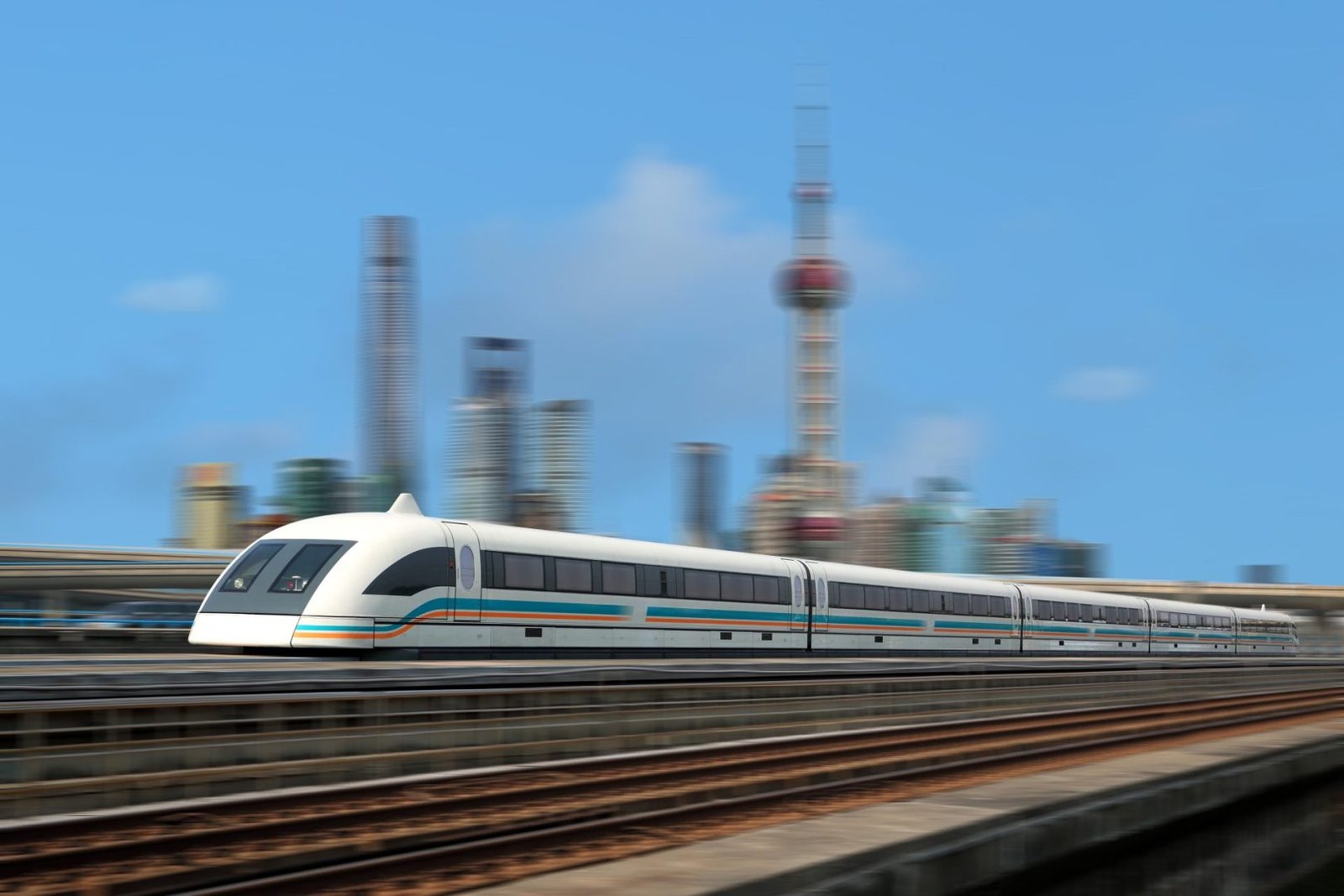

The transportation landscape is experiencing a remarkable shift with the emergence of maglev technology. These magnetic levitation trains hover above their tracks using powerful magnets, eliminating the friction that has limited conventional rail systems for over a century. The result is a transportation method that combines unprecedented speed with environmental responsibility, addressing two of the most pressing challenges in modern travel.
Maglev trains represent more than just an incremental improvement over existing rail systems. They fundamentally reimagine how trains operate by removing physical contact between the vehicle and track entirely. This breakthrough has captured attention from transportation planners worldwide who are searching for solutions to growing congestion and mounting environmental concerns.
The science behind the float
The levitation process relies on strategically positioned magnets underneath the train and embedded within the track system. These magnets generate a repelling force powerful enough to lift the entire train several centimeters into the air. The absence of wheels grinding against rails means friction virtually disappears from the equation.
Two distinct approaches accomplish this levitation effect. Electromagnetic suspension uses electromagnets that attract the train upward toward the track, creating consistent lift throughout the journey. Electrodynamic suspension takes the opposite approach, employing magnets that repel each other to push the train away from the track surface. Both systems harness electromagnetic principles to keep multiple tons of train and passengers suspended in midair.
Propulsion without wheels
Levitation solves only half the challenge. Moving the suspended train forward requires an equally innovative solution. Maglev systems use magnetic fields along the track to create propulsion, pulling or pushing the train in the desired direction. In electromagnetic suspension systems, magnetic fields ahead of the train attract it forward while fields behind it provide additional push. Electrodynamic systems rely on repelling forces that continuously propel the train along its route.
This propulsion method eliminates the need for traditional engines or wheel-based traction systems. The train essentially glides through space, guided by carefully controlled magnetic fields that provide both movement and steering. The experience for passengers is remarkably smooth, with none of the vibration or rattling associated with conventional rail travel.
Breaking speed barriers
The performance capabilities of maglev trains have exceeded even optimistic projections. Test runs have demonstrated speeds surpassing 600 kilometers per hour, while operational systems in China already transport passengers at 430 kilometers per hour. These velocities place maglev technology firmly in competition with short-haul air travel for certain routes.
The efficiency gains extend beyond raw speed. Without friction draining energy, maglev trains consume significantly less power per passenger than traditional high-speed rail, automobiles or aircraft. The tracks themselves benefit from reduced wear since there’s no physical contact causing deterioration. Maintenance costs drop substantially compared to conventional rail systems that must regularly replace worn wheels and damaged track sections.
Keeping steady at extreme speeds
Speed means nothing without stability. Maglev trains incorporate sophisticated guidance systems using magnets positioned along the sides of the vehicle. These magnets interact with the track to prevent lateral movement, keeping the train centered even during high-speed travel through curves.
Advanced sensor networks constantly monitor the train’s position relative to the track. Computer systems process this data in real time, making instantaneous adjustments to magnetic field strength. These micro-corrections happen thousands of times per second, ensuring the train remains level and stable regardless of speed or track conditions. Passengers experience a ride quality that surpasses even the smoothest conventional trains.
A cleaner way forward
Environmental advantages position maglev technology as a cornerstone of sustainable transportation planning. The systems can run entirely on renewable energy sources including solar and wind power, eliminating dependence on fossil fuels. This flexibility allows maglev networks to achieve carbon neutrality far more easily than conventional transportation methods.
Noise pollution drops dramatically compared to traditional trains. The lack of wheel-rail contact removes the primary source of train noise, making maglev systems suitable for densely populated areas where noise complaints typically limit transit development. Communities near maglev lines experience minimal disturbance even as trains pass at tremendous speeds.
What comes next
Engineers continue pushing maglev capabilities toward even more ambitious goals. Current experiments involve running maglev trains through vacuum tubes, which would reduce air resistance to near zero. Early projections suggest these systems could achieve speeds exceeding 1,000 kilometers per hour, making them faster than commercial aviation for many routes.
Urban applications are also under development. City planners are exploring maglev technology for local transit including elevated trams and bus systems. These applications could transform urban mobility by offering quiet, efficient transportation that doesn’t contribute to street-level congestion or air pollution. The technology that once seemed suited only for long-distance express routes may soon reshape how people move within cities as well.