




Dajah Dorn unveils the fearless truth behind Big Shark
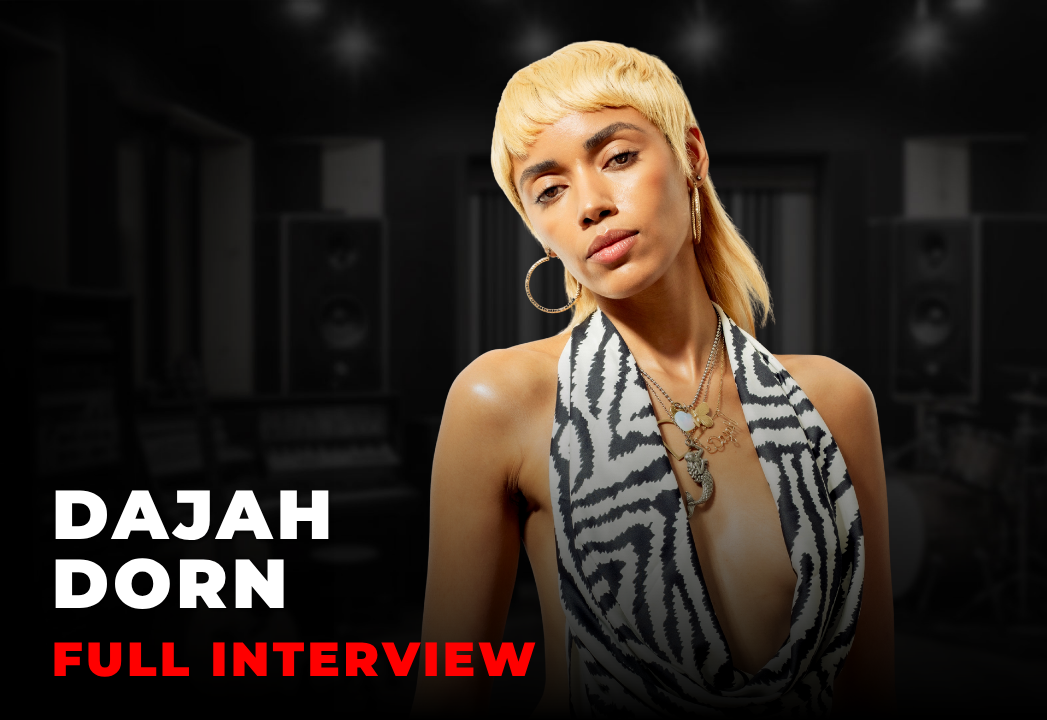

The Jacksonville singer-rapper discusses her gospel roots, modeling detour and why her alter ego is taking over
Dajah Dorn is carving out her own lane in contemporary R&B with a sound that refuses to be boxed in. The Jacksonville, Florida native blends gospel-rooted vocals with Southern hip-hop grit and unapologetic confidence, creating music that feels both deeply personal and universally resonant. From singing in her grandmother’s church choir to modeling in New York City to releasing her debut EP “Having My Way,” Dorn has taken an unconventional path to artistry. Her latest release, “Big Shark Freestyle,” introduces fans to her rap alter ego and signals a bold new chapter. In this conversation, she opens up about family influence, creative evolution and why she’s ready to get darker with her next project.
Growing up in a Southern Baptist church shaped your artistry. How did that environment influence your sound?
I don’t really think about it until people ask me, because it was just normal, it was my life. I grew up singing songs with really no music besides your hands and your feet, clapping and stamping. That’s where my rhythm comes from. I grew up singing in the choir. Your grandma makes you do whatever she tells you to do in church, so I got volunteered to sing in the choir, I was an usher. I love those elements in my music because we know all the best singers are in church. They’re not even on the radio.
Who discovered you had this voice? Were you singing in the shower one day?
I honestly used to be really shy. My mama could sing, and I grew up all in my uncle’s stuff because my uncles were at my grandma’s house. I would find their composition notebooks with wraps in them. I always naturally loved music. My mama played a lot of music, my other grandparents played a lot of music. I knew I could sing because my mama could sing, but I didn’t really share it until I got older. If I think I’m somewhere sitting by myself quiet, somebody might have eavesdropped on me, but I had to grow into actually wanting to share that I could sing.
Your uncles exposed you to Dirty South music early. How did that influence your sound?
I love rap. Everybody you know can rap for the most part. Our people know how to rhyme, and that’s how a lot of songs come to me. Some of the earliest songs I learned word for word were always rap songs. I just love the style of the videos, the fur. I love me a good fur. All the women in the video actually inspired me to want to model. The whole culture of that Southern hip-hop is just in my blood.
Moving to New York for modeling was bold. How did that help you find confidence as an artist?
I actually went to the military first out of high school. I realized there that I was told growing up that I was shy, but I’m actually not shy. If I don’t have nothing to say to you, I don’t have nothing to say to you. But I’m actually very much outgoing, very much a leader. Then I went to an HBCU, and there were modeling troops on campus. I had a friend who went to New York for an internship to work at a fashion show, and when he came back, he was like, we gotta move to New York. My plan was, I’m not quite ready to let people know that I know how to sing. I was gonna get people used to looking at me. If people start to see my face in campaigns or at shows, that’ll get people used to me, so as I show more parts of myself, it’ll be like, okay, she’s just a star. That makes sense.
What was the turning point during the pandemic that made you take music seriously?
Life got serious for everybody. We saw how people were being affected, families losing family members. I was like, there’s really nothing else to do. For my generation, this was my first time with a world pandemic. It was crazy for my mind. I was like, well, I don’t got nothing else to do, might as well do what I say I’m gonna do. Life is short.
Your EP “Having My Way” introduced your unique sound. What story did you want to tell?
I made the project over three years. It was three years of me making those songs and going through my life, living my life. I was going through a lot since I moved to New York. Dating, friendships, wanting to become out in the open and share my actual passions and gifts. Having my way means all of this is mine. My life is my life. The good, the bad, whatever. I’m taking it for what it is, and I’m having my way with it. A lot of the songs are about love but different contexts of love. I make it a point to not talk about love in a victim’s way because there’s always something to gain from whatever lesson you go through. I love the sequence on the project because “When It Comes To Me” is such a dramatic finale. You leave it thinking about yourself.
“Love U 4 Free” connected with fans. What inspired that track?
We wanted to put out something fun, a fun dance. I had released “I Don’t Want You,” which is slower, and “Twice on Sunday,” which is more of a ballad. I wanted to do something fun that people could dance to. I’m a summer baby, my birthday’s in July. We released that two weeks before my birthday. We just wanted to dance. That’s all it was about.
Let’s talk about “Big Shark Freestyle.” What does this represent artistically?
Big Shark is my alter ego. That’s the rapper me. If you see me doing something crazy, it’s not me, it’s Big Shark. If I’m in the club smoking, you see me drinking, you see me cuss somebody out, that’s Big Shark. I always rap, but I don’t always record rap songs. People that know me always want me to rap. I actually recorded Big Shark Freestyle after I recorded a more traditional R&B song. I like to drink rosé when I’m in the studio. Whenever I’m in the studio in Atlanta, they always give me a bottle of rosé. Justin, one of the producers, was like, rap! He played the beat, and we were watching videos at the same time on the TV. T.I.’s “24’s” video was on, and I’m looking and I’m hearing, and then we just put it together like that. It just came out naturally. I actually punched in a lot, I didn’t really write that song. I wanted to have some more fun. I realize sometimes I can take myself very seriously because I always feel like what I say is important. Big Shark Freestyle is my little bougie ghetto version.
How do you stay grounded and true to yourself in an industry full of imitation?
I honestly think it’s because I was raised by elderly people. I was raised by my grandma, my great-grandma, my granddaddy. My great-grandma had five sisters. I was always around 60, 70-year-old ladies going yard sale shopping. My mama was raised by her grandma. We have that old spirit. Old people don’t care. They don’t hide nothing. They say the first thing that comes to their mind. I was always that little girl where you’ll look over and be like, what did this little girl just say? But that was always me. I just don’t care. It’s genuine.
When people hear your music, what do you want them to feel?
Definitely self-assuredness. I hope I can spread that same thing. Be yourself. I’m not even the type of person that wants my supporters to be like me. The only thing you need to be like me in is putting yourself first. Love yourself, put yourself first. Whatever you want to do, if you want to be a painter, go be a painter, be the best painter. Just have the ability to think for yourself.
What can fans expect next?
I hope I have some performances coming up because “Having My Way” needs to be shown more. The songs really need to be appreciated more. I haven’t gotten a chance to perform all the songs on my set. I really do want to sing some of the songs live. I’m always in project mode. The pattern and the people I favor and gravitate towards are conceptual artists. Solange, Kanye, Rihanna, Beyoncé. People who make projects. I really love that. I’m gonna be putting out some singles, I’m gonna be rapping more. I want my next project to be a blend of everything we just talked about. One thing I didn’t really do on “Having My Way” was talk about deeper things, other feelings. It was mostly love and be positive, but ain’t nothing wrong with getting dark sometimes. Just tell your story. I wanna get deep.